
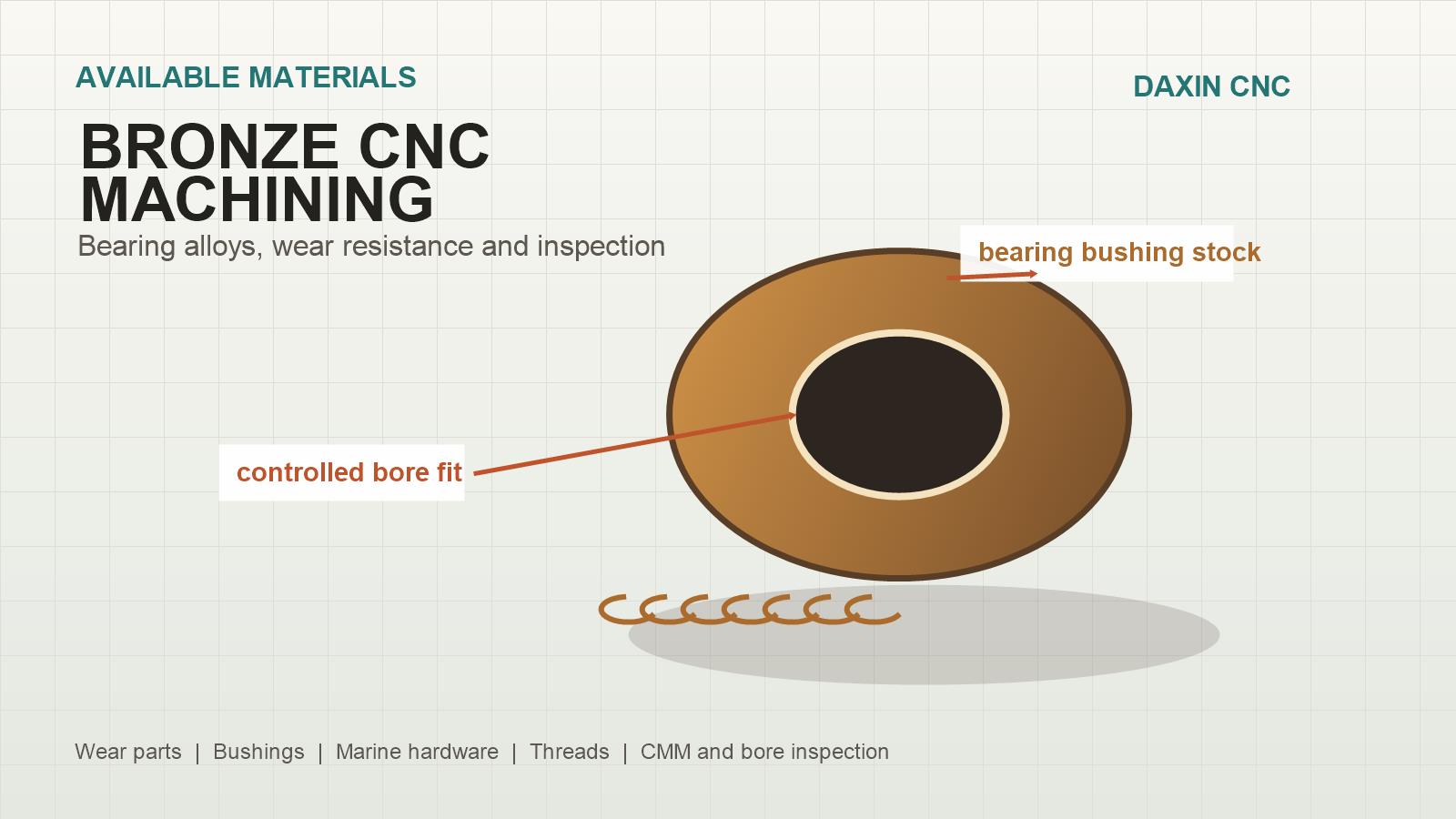
Bronze CNC machining is commonly chosen for bushings, sleeves, bearing blocks, wear plates, marine hardware, valve components, and sliding parts because bronze offers good wear behavior, corrosion resistance, and machinability. The important decision is not just whether to use bronze, but which bronze alloy fits the load, lubrication, environment, tolerance, thread, and inspection requirement.
Bronze is a family of copper-based alloys. Some grades machine easily and produce clean chips, while others are stronger, tougher, or better for heavy wear. In CNC production, alloy selection affects tool life, surface finish, burr behavior, bore roundness, thread quality, and cost. A buyer should share the real application, not only the material name, because a bronze bushing and a marine bracket may need very different grades.
Why Choose Bronze for CNC Machined Parts?
Bronze is useful when a part needs sliding contact, resistance to galling, good corrosion behavior, and better bearing performance than many ordinary steels or aluminums. It is often used with shafts, pins, bushings, guides, gears, pump components, and marine fittings. Compared with brass, many bronze grades are better suited for wear and load-bearing applications.
- Wear resistance: bronze can work well in sliding and bearing contact when the grade and lubrication are suitable.
- Corrosion resistance: many bronze alloys perform well in moisture, marine, and industrial environments.
- Machinability: some grades cut cleanly, while high-strength grades need more careful tool planning.
- Dimensional stability: bronze is often selected for repeatable bores and wear surfaces.
- Functional appearance: bronze can provide a recognizable copper-alloy finish without extra coating.
Common Bronze Alloys for CNC Machining
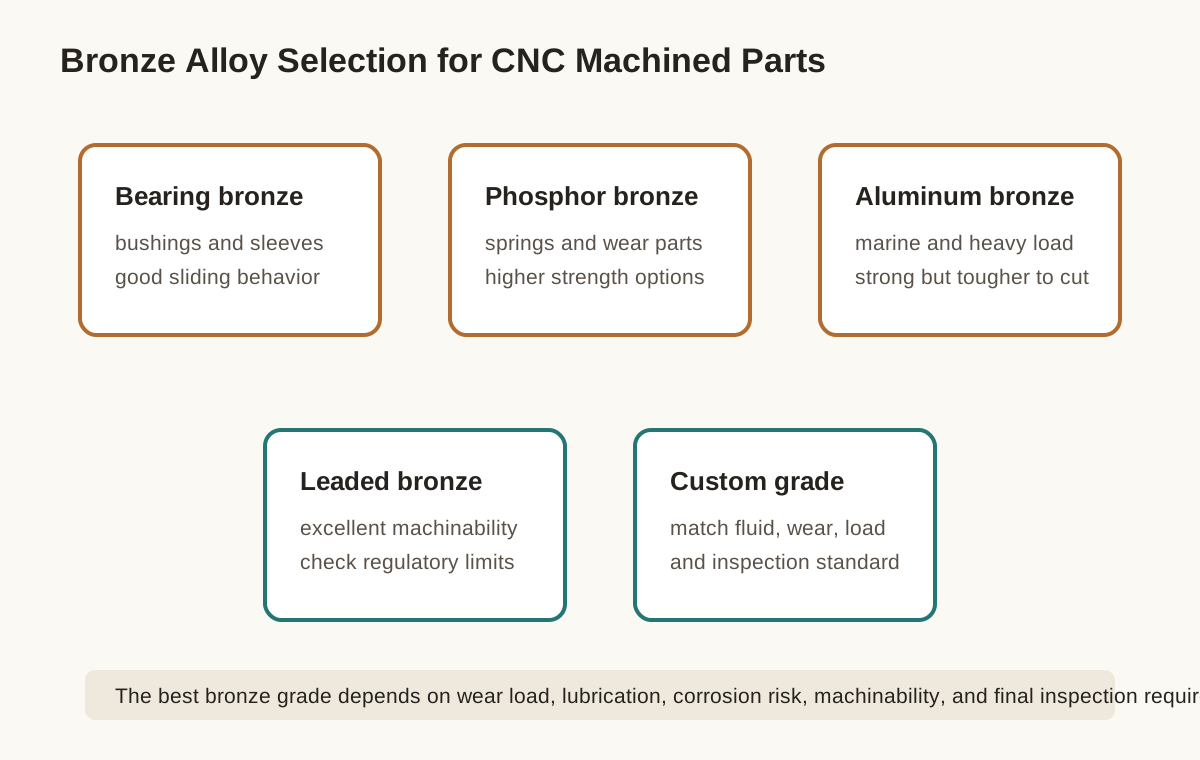
The right bronze alloy depends on load, speed, lubrication, fluid exposure, regulatory requirements, and cost. Leaded bearing bronze may machine very well, but lead content can be unacceptable in some applications. Aluminum bronze can be strong and corrosion resistant, but it is tougher to machine. Phosphor bronze may be chosen for wear and strength in selected parts.
| Bronze Type | Typical Application | Machining Concern |
|---|---|---|
| Bearing bronze | Bushings, sleeves, thrust washers, wear pads | Bore size, roundness, and surface finish |
| Leaded bronze | High-machinability bearing components | Check environmental or regulatory limits |
| Phosphor bronze | Wear parts, springs, electrical and sliding components | Tool sharpness and burr control |
| Aluminum bronze | Marine hardware, high-strength wear parts, heavy load components | Tough cutting behavior and tool wear |
| Custom copper alloy | Special corrosion, electrical, or bearing requirements | Confirm stock availability and certification |
Machining Behavior: Chips, Tools, and Surface Finish
Bronze machining behavior changes significantly by grade. Free-machining bronze can produce short chips and clean finishes. Tougher bronze grades may generate more heat, higher cutting force, or built-up edge if tooling is not sharp. Correct tool geometry, stable workholding, coolant strategy, and chip evacuation are important for keeping bores round and faces clean.
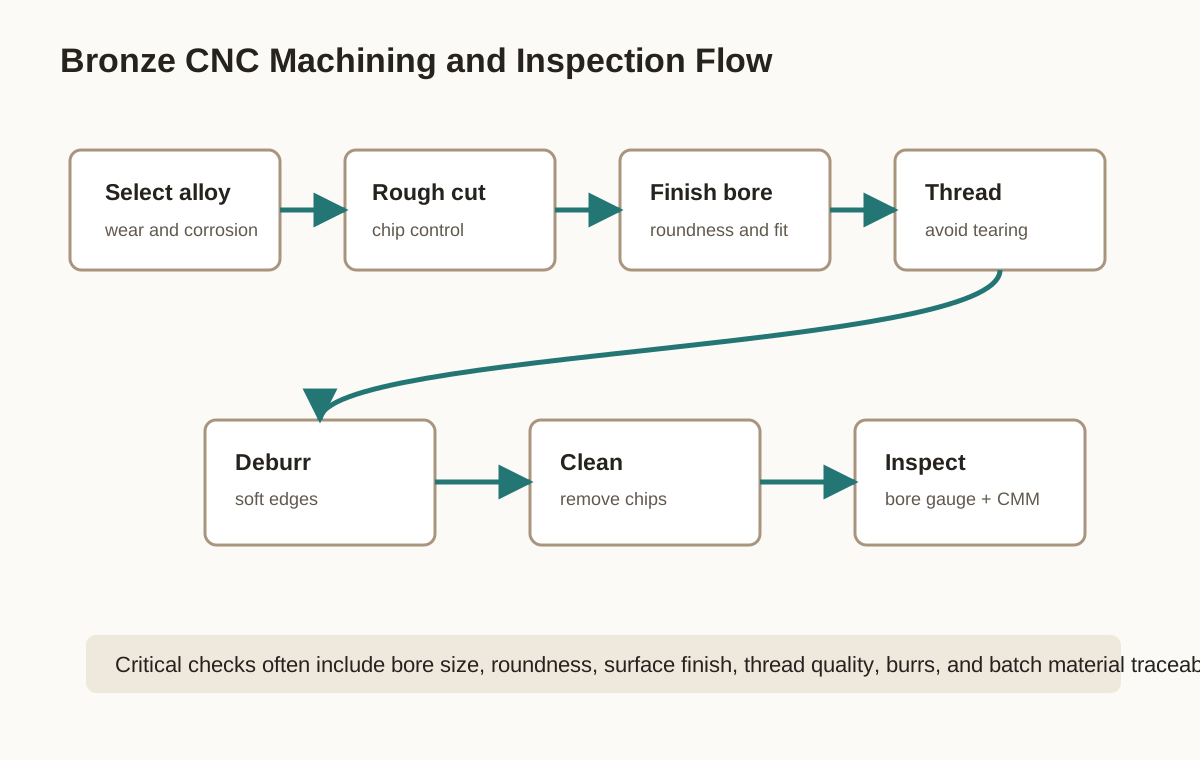
Sharp tools are especially important for small grooves, thin walls, and fine threads. A dull tool may smear the surface instead of cutting cleanly, leaving burrs that affect assembly or wear performance. For bearing parts, surface finish inside the bore should be specified according to shaft contact, lubrication, and expected life.
Bronze Bushings, Sleeves, and Bearing Fits
Bushings and sleeves are among the most common bronze CNC machined parts. The key features are bore diameter, outside diameter, concentricity, length, chamfers, lubrication grooves, and surface finish. If the bushing is press fit into a housing, the outside diameter and wall thickness need careful control because pressing can reduce the final inside diameter.
For more details on bore fit and press-fit behavior, see DAXIN’s related article on CNC machined bushings and sleeves. Bronze bushings follow the same practical rule: inspect the functional fit, not only the free-state dimensions.
Tolerances and Inspection for Bronze CNC Parts
Bronze can hold accurate dimensions, but tolerances should match the part function. A bearing bore may need tight size and roundness. A marine bracket may need stronger focus on hole position, thread quality, and corrosion behavior. A wear plate may need flatness and thickness control. Applying the same tight tolerance to every surface adds cost without improving performance.
| Feature | Why It Matters | Inspection Tool |
|---|---|---|
| Precision bore | Controls shaft clearance, lubrication, and wear | Bore gauge, plug gauge, or CMM |
| Outside diameter | Controls press fit or location in a housing | Micrometer or CMM |
| Face flatness | Controls thrust contact or assembly seating | Granite plate and indicator |
| Threaded holes | Controls fitting, fastener, or plug engagement | Thread gauge and depth check |
| Surface finish | Affects sliding wear and lubrication film | Surface roughness tester |
Threads, Grooves, and Small Features
Bronze threads can be strong and reliable when the grade, tool condition, and engagement length are suitable. For small threads, burr control is important because bronze chips can cling to thread starts or internal corners. Thread milling may be useful for nonstandard threads, larger diameters, or parts where chip control is difficult.
Lubrication grooves, oil holes, and cross holes should be deburred carefully. A sharp burr inside an oil groove can damage a shaft or contaminate a bearing surface. If the part has fluid passages, buyers should define cleaning and inspection expectations before production.
Surface Treatment and Corrosion Considerations
Many bronze parts are used without coating because the base material already provides useful corrosion behavior and wear performance. However, parts may still need cleaning, polishing, passivation-like chemical cleaning, anti-tarnish treatment, or protective packaging depending on appearance and storage requirements. Plating can be used in special cases, but coating thickness and adhesion should be reviewed around bearing surfaces and threads.
If a bronze part must slide against steel, stainless steel, or another copper alloy, the mating material, lubrication, load, and environment should be considered together. For general wear-part planning, DAXIN’s article on CNC machined wear plates and wear strips is a useful reference.
When Bronze Is Better Than Brass or Aluminum
Bronze is often preferred over brass for bearing and wear applications because many bronze grades handle sliding contact and load better. Aluminum is lighter and cheaper to machine in many cases, but it does not provide the same bearing behavior. Stainless steel may be stronger or more corrosion resistant in some environments, but it can gall or wear differently without a bushing or coating.
The choice should be made from function. If the part mainly needs electrical conductivity and easy machining, brass or copper may be better. If it needs lightweight structure, aluminum may be better. If it needs sliding wear resistance and corrosion resistance, bronze is often worth considering.
DFM Tips for Buyers
When requesting a bronze CNC machining quote, provide the alloy grade, application, shaft or mating part dimensions, lubrication condition, load direction, surface finish requirement, tolerance class, and inspection needs. For bushings, state whether dimensions are required before or after press fit. For wear parts, identify the contact face and expected mating material.
- Do not specify only “bronze” if the application has load, wear, or corrosion requirements.
- Mark bearing bores, contact faces, lubrication grooves, and press-fit diameters as critical.
- Confirm whether material certification or RoHS / lead restrictions apply.
- Define deburring requirements for oil holes, grooves, and cross holes.
- Inspect final functional dimensions after any cleaning, polishing, or press-fit operation.
FAQ
Is bronze easy to CNC machine?
Some bronze grades machine very well, especially free-machining bearing bronzes. Stronger grades such as aluminum bronze can be tougher and may require more careful tooling and speed selection.
What bronze is best for bushings?
It depends on load, speed, lubrication, shaft material, environment, and regulatory limits. Bearing bronze and related copper alloys are common choices, but the grade should be selected for the actual service condition.
Can bronze parts hold tight tolerances?
Yes, bronze can hold accurate bores, faces, and diameters when the stock, fixturing, tool condition, and inspection plan are controlled. Tight tolerances should be applied to functional features.
Does bronze need surface treatment?
Often no, but cleaning, polishing, anti-tarnish protection, or special coating may be required for appearance, storage, or unusual environments. Bearing surfaces should not be coated without checking fit and wear behavior.
Final Thoughts
Bronze CNC machining is a strong option for bearing parts, bushings, sleeves, wear components, and corrosion-resistant hardware when the alloy is chosen correctly. The best results come from connecting grade selection, machining strategy, bore control, thread quality, deburring, surface finish, and inspection to the real operating conditions of the part.