
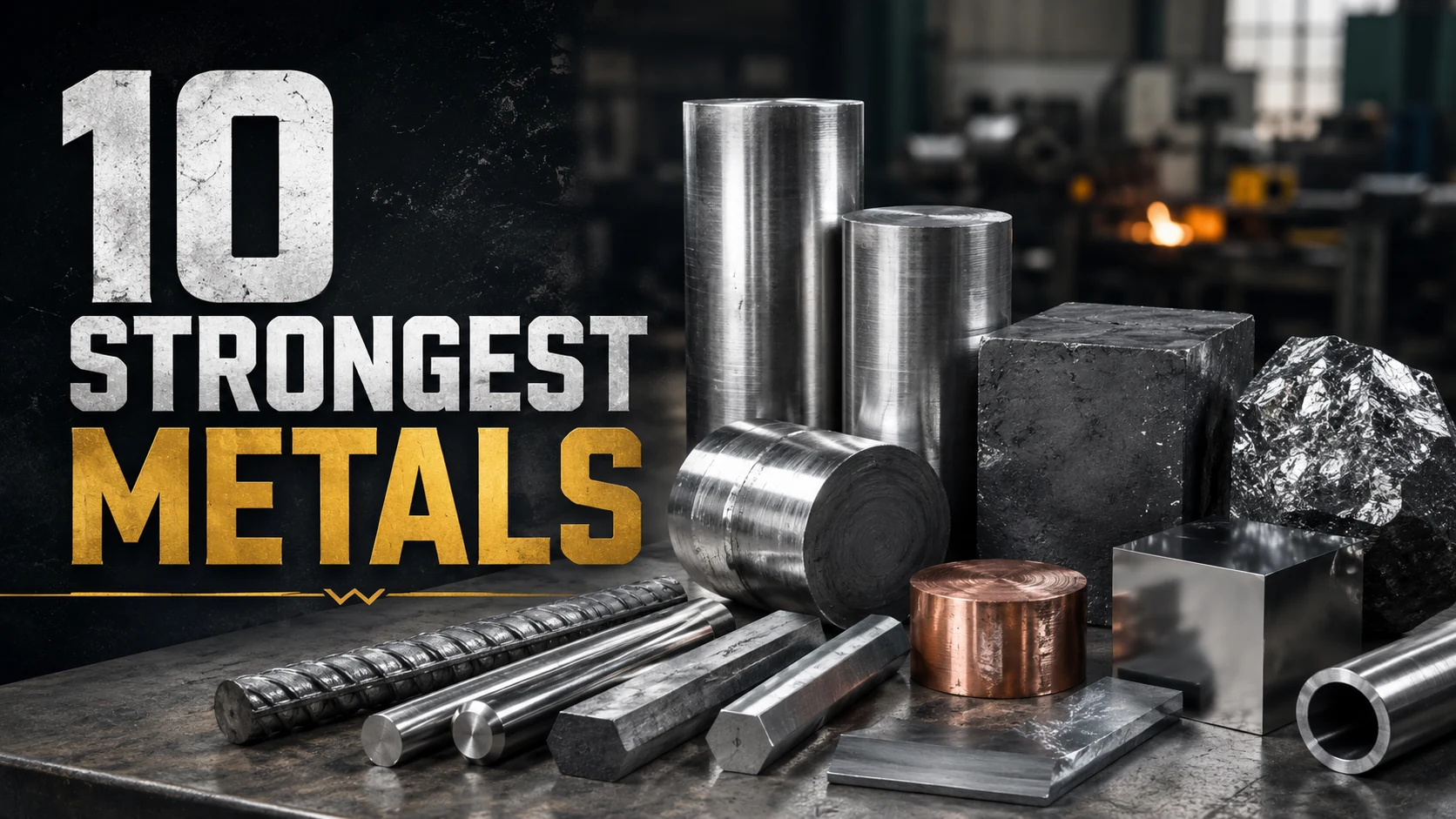
10 Strongest Metals on Earth: No. 10 May Surprise You
What are the Strongest Metals on earth? The honest answer is more interesting than a simple top 10 list: strength can mean tensile strength, yield strength, hardness, impact toughness, heat resistance, fatigue strength, or strength-to-weight ratio. That is why tungsten, maraging steel, Inconel, titanium alloy, chromium, tool steel, 17-4PH stainless steel, cobalt chromium, tantalum, and magnesium alloy can all appear in a serious ranking, but for different reasons.
This article uses a traffic-friendly countdown style, but it is written for engineers, buyers, and product teams who care about real metal parts. If you are choosing material for CNC machining, the strongest-looking option on a chart may not be the best option for your part. Some strong metals are brittle. Some are hard to machine. Some are strong only after heat treatment. Some are expensive. Some are amazing in aerospace but overkill for a simple bracket.
Quick Answer: Strongest Metals Are Not One Single Winner
If we only look at pure metals, tungsten is one of the strongest and most heat-resistant candidates. If we look at engineered alloys, maraging steel and MP35N-type cobalt/nickel alloys can reach extremely high tensile strength. If we look at hardness, chromium and tool steels stand out. If we look at high-temperature strength, Inconel is hard to ignore. If we look at strength-to-weight ratio, titanium alloy and even magnesium alloy become much more interesting.
Comparison Table: 10 Strongest Metals and Why They Matter
| Rank | Metal or Alloy | Why It Is Strong | CNC Machining Note | Typical Applications |
|---|---|---|---|---|
| 1 | Tungsten | High tensile strength, extreme melting point, density, wear resistance | Difficult, brittle, heavy, often EDM or grinding | Electrodes, weights, radiation shielding, high-heat parts |
| 2 | Titanium alloys | Excellent strength-to-weight ratio and corrosion resistance | Low thermal conductivity, tool wear risk | Aerospace, medical, robotics, performance hardware |
| 3 | Inconel 718 | Maintains strength under heat and corrosion | Work-hardens and needs rigid setup | Turbines, hot gas parts, oil and gas, aerospace fasteners |
| 4 | Maraging steel | Ultra-high tensile strength after aging with good toughness | Machines better before aging | Landing gear, shafts, tooling, high-stress parts |
| 5 | Chromium | Very high hardness and corrosion resistance | Usually used as alloying/plating element, not common as machined bulk part | Stainless steel, hard chrome, wear surfaces |
| 6 | Tool steel / high-speed steel | Hard carbides, heat treatment, red hardness | Annealed machining then heat treat is common | Dies, molds, cutters, wear plates |
| 7 | 17-4PH stainless steel | Precipitation hardening plus corrosion resistance | Good CNC choice when heat-treated strength is needed | Shafts, valves, fixtures, aerospace hardware |
| 8 | Cobalt chromium / MP35N-type alloys | High strength, fatigue resistance, wear resistance, biocompatibility | Demanding, expensive, needs sharp tools and control | Implants, springs, harsh-environment fasteners |
| 9 | Tantalum | Dense, corrosion-resistant, refractory, tough in harsh chemicals | Gummy and expensive, but machinable with care | Chemical parts, capacitors, medical and corrosion-resistant hardware |
| 10 | Magnesium alloys | Not the hardest, but surprising strength-to-weight ratio | Very machinable, but chips and dust require fire safety | Lightweight housings, aerospace, automotive, electronics |
1. Tungsten: The Heavyweight Champion of Heat and Strength
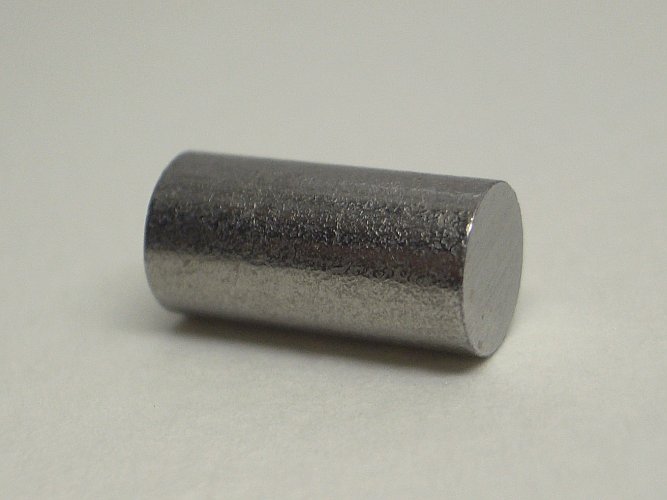
Tungsten deserves the top position because it combines high tensile strength, extreme density, a famously high melting point, and excellent resistance to heat. It is not a friendly everyday CNC material, but it is one of the benchmark metals people think of when they ask about the Strongest Metals. Tungsten can survive conditions that would soften or destroy more ordinary alloys, which is why it appears in electrodes, high-temperature components, radiation shielding, counterweights, and specialized tooling.
The catch is machinability. Tungsten is heavy, stiff, and can be brittle depending on form and processing route. Pure tungsten is not normally selected for a low-cost machined bracket. Many tungsten parts require grinding, EDM, powder metallurgy, or very careful machining strategy. If you only need a strong steel part, tungsten is usually overkill. If you need heat, density, and wear performance, it becomes a different story.
2. Titanium Alloys: Strong, Light, and Famous for a Reason
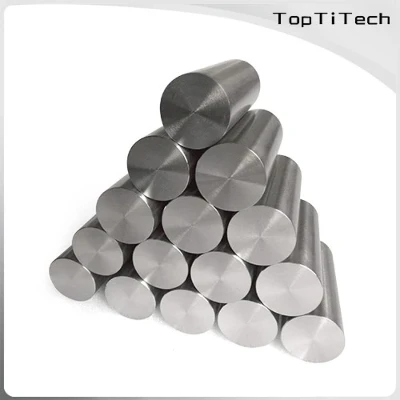
Titanium alloy, especially Ti-6Al-4V, is not always the strongest metal by raw tensile number. Its superpower is strength-to-weight ratio. It is much lighter than steel, resists corrosion well, performs in medical and aerospace environments, and can carry serious mechanical load without adding unnecessary mass. This is why titanium is often the material people imagine when they hear high-performance metal.
For CNC machining, titanium is a respect-demanding material. Heat does not leave the cutting zone easily, so tools can wear quickly. Poor tool engagement can cause rubbing, work hardening, chatter, and damaged surface finish. A good titanium machining plan uses sharp tools, rigid workholding, controlled chip load, coolant strategy, and conservative parameters. Titanium is excellent when weight, strength, and corrosion resistance justify the cost.
3. Inconel 718: The Metal That Stays Strong When Things Get Hot

Inconel 718 is a nickel-chromium superalloy that keeps useful strength in high-temperature and corrosive environments. That is why it appears in turbines, aerospace fasteners, exhaust hardware, oil and gas components, and high-stress parts that ordinary steels cannot handle. If tungsten is the dramatic pure-metal champion, Inconel is the practical industrial survivor.
Machining Inconel is difficult because it work-hardens, resists cutting, generates heat, and can punish weak setups. Tooling must stay sharp, engagement must be controlled, and feeds should avoid rubbing. Inconel is also expensive, so scrap and rework are painful. Buyers should reserve it for parts that truly need heat resistance, corrosion resistance, and high stress performance. When the environment is mild, stainless steel or alloy steel may give a much better cost-performance balance.
4. Maraging Steel: Ultra-Strong Steel With a Clever Heat Treatment Trick

Maraging steel can reach extremely high tensile strength after aging heat treatment while keeping useful toughness and dimensional stability. Unlike many high-carbon tool steels, maraging steels use very low carbon and rely on nickel, cobalt, molybdenum, titanium, and aging reactions to create strength. That makes them valuable in aerospace structures, landing gear, shafts, tooling, and high-stress mechanical systems.
The buyer-friendly part is that maraging steel is often machined in the softer condition and then aged. That can make it more practical than machining an already very hard tool steel block. However, final heat treatment still needs to be planned. Engineers should consider finish machining stock, dimensional change, inspection timing, and whether critical surfaces need grinding after aging.
5. Chromium: One of the Hardest Metallic Elements

Chromium is famous for hardness, shine, and corrosion resistance. Pure chromium is not commonly machined into everyday parts, but it is a crucial reason stainless steels resist corrosion and hard chrome coatings resist wear. Chromium is also one of the metals that makes people confuse strength with hardness. A hard material resists indentation and wear, but it may not be the toughest or most ductile choice.
From a CNC perspective, chromium is usually important as an alloying element or coating rather than a bulk machined material. It appears in stainless steels, tool steels, nickel alloys, and plating systems. If a drawing asks for hard chrome plating, the coating thickness, masking, hydrogen embrittlement risk, surface finish, and post-plating grinding plan should be defined before machining.
6. Tool Steel and High-Speed Steel: Built to Stay Hard Under Abuse
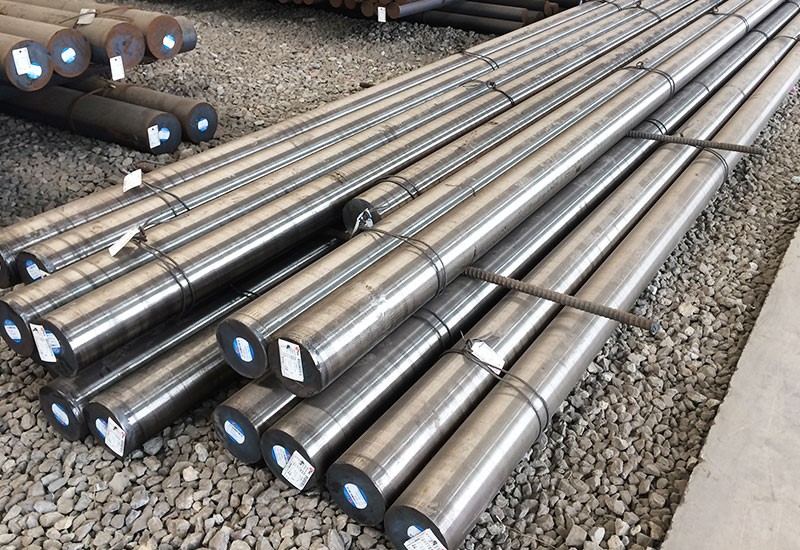
Tool steels are designed for hardness, wear resistance, and performance after heat treatment. High-speed steel goes further by maintaining hardness at elevated cutting temperatures, which is why it became important for cutting tools before carbide took over much of the market. D2, A2, H13, M2, M42, and similar grades all belong to the world of hard working metals, even though their exact properties vary widely.
For machined parts, tool steel is excellent when the part must resist wear, deformation, impact, or hot work conditions. The usual process is rough machine in annealed condition, heat treat, then grind or finish critical features. Tight holes, flatness, and sharp edges can move during heat treatment. A good supplier will discuss distortion risk before quoting rather than pretending tool steel behaves like 6061 aluminum.
7. 17-4PH Stainless Steel: Strong, Corrosion-Resistant, and Practical

17-4PH stainless steel earns a place because it combines useful corrosion resistance with high strength after precipitation hardening. It is more practical for many CNC parts than exotic materials above it on the list. Engineers use it for shafts, valve parts, pump components, aerospace hardware, fixtures, fasteners, and precision parts that need both strength and corrosion resistance.
In CNC machining, 17-4PH is manageable compared with Inconel or cobalt alloys, but it is still tougher than free-machining aluminum or brass. Heat treatment condition matters. H900 gives high strength and hardness; H1150 gives more toughness and lower strength. Buyers should specify the condition, not just the grade. If the part needs threads, thin walls, or tight bores, plan whether heat treatment happens before or after final machining.
8. Cobalt Chromium and MP35N-Type Alloys: Small Parts, Serious Strength

Cobalt chromium and related nickel-cobalt-chromium-molybdenum alloys are not always household names, but they are serious engineering materials. They offer high strength, wear resistance, fatigue resistance, corrosion resistance, and biocompatibility. That is why they appear in medical implants, dental hardware, springs, high-performance fasteners, and harsh-environment components.
The machining challenge is real. These alloys can be expensive, tough, abrasive, and unforgiving. Small features, thin walls, and polished surfaces need careful tool selection and inspection. If you are designing a part from a cobalt-based alloy, avoid unnecessary sharp internal corners, define critical surfaces clearly, and give the supplier enough information about finish, passivation, and inspection requirements.
9. Tantalum: Not Flashy, But Almost Impossible to Ignore in Corrosion

Tantalum is dense, corrosion-resistant, refractory, and valuable in chemical processing, electronics, medical devices, and specialty components. It may not dominate every strongest-metal ranking, but it deserves attention because it survives in environments that destroy more common metals. Strength is not only about pulling a bar until it breaks. Sometimes the strongest choice is the one that keeps working in aggressive chemistry.
Machining tantalum is possible, but it can be gummy and expensive. Chips may not break easily, and heat control matters. Because the material cost is high, DFM review is especially important. Simplifying non-critical features, confirming tolerances, and avoiding unnecessary material removal can save real money.
10. Magnesium Alloys: The Surprise Entry

Here is the surprise: magnesium alloy is not one of the hardest metals. It is not stronger than tungsten, maraging steel, or Inconel by raw tensile strength. So why include it? Because strength-to-weight ratio matters. Magnesium alloys are extremely light, and in the right application they can deliver useful stiffness and strength while cutting weight dramatically. That makes them attractive for aerospace, automotive, electronics, tooling plates, housings, and portable equipment.
The important warning is safety. Magnesium is easy to machine, but chips, dust, and fine swarf require fire-aware handling. Shops must use proper chip management, avoid unsafe dust buildup, and follow material-specific machining practices. For the right geometry, magnesium can feel almost unfairly efficient. For the wrong shop setup, it is not worth the risk.
Hardest vs Strongest: Do Not Mix These Up
Many viral articles use “hardest metal” and “strongest metal” as if they mean the same thing. They do not. Hardness means resistance to indentation, scratching, or wear. Tensile strength means resistance to being pulled apart. Yield strength means resistance to permanent deformation. Toughness means resistance to crack growth and impact. Fatigue strength means resistance to repeated loading. Creep strength means resistance to deformation under heat and stress.
For CNC parts, the correct question is not “Which metal is strongest?” It is “Which metal is strong enough for this load, practical for this geometry, compatible with this finish, and affordable for this quantity?” A material that wins a chart can still be a poor choice if it makes machining, heat treatment, inspection, or assembly too risky.
How to Choose the Right Strong Metal for CNC Machining
| Need | Likely Shortlist | Why |
|---|---|---|
| Lightweight high-strength part | Titanium alloy, magnesium alloy, 7075 aluminum | Weight matters as much as raw strength. |
| High-temperature part | Inconel, tool steel, tungsten alloys | Strength must survive heat. |
| Wear-resistant tool or die | Tool steel, high-speed steel, carbide, hard chrome | Hardness and wear resistance matter most. |
| Corrosion-resistant strong part | 17-4PH stainless, titanium, Inconel, tantalum | Environment can be more important than tensile strength. |
| Medical or implant-style hardware | Titanium alloy, cobalt chromium, 316LVM, tantalum | Biocompatibility and surface control matter. |
CNC Buyer Checklist Before Choosing a Strong Metal
Before you pay for an expensive strong metal, check the part function. Does the part fail by bending, wear, heat, corrosion, fatigue, impact, or weight? These are different failure modes, and each one points to a different material. Tungsten may look impressive, but it does not solve a lightweight aerospace bracket. Titanium may be famous, but it is not automatically better than 17-4PH stainless steel for a compact shaft. Inconel may survive heat, but it is expensive and slow to machine if the part only works at room temperature.
Also check the manufacturing route. Some metals are best machined before heat treatment. Some need grinding after hardening. Some need special coolant, fire safety, chip control, or stress relief. Some alloys require certification, traceability, ultrasonic inspection, or controlled surface treatment. If your drawing only says “strong metal” without specifying grade, heat treatment, surface finish, and critical dimensions, the quote will be noisy and the finished part may not match the real requirement.
For cost control, mark the critical features clearly. A high-strength part may need one tight bearing bore, one flat sealing face, or one true-position hole pattern, while other surfaces can remain general tolerance. Over-tolerancing every face of an Inconel or titanium part can add machining time without improving function. Good DFM review is not about making the part weaker; it is about spending precision only where the assembly truly needs it.
Related DAXIN Services
DAXIN supports CNC machining services for aluminum, stainless steel, brass, copper, steel, titanium, engineering plastics, and selected high-strength alloys. Useful related resources include stainless steel CNC machining, titanium vs aluminum CNC machining, steel vs aluminum strength, surface treatment after CNC machining, and CNC machining tolerances.
FAQ
What is the strongest metal in the world?
If you mean pure metal, tungsten is one of the strongest and most heat-resistant choices. If you include engineered alloys, maraging steel, Inconel, and cobalt/nickel superalloys can beat pure metals in specific strength categories.
What is the hardest metal?
Chromium is one of the hardest metallic elements, while tool steels and carbide-based materials can be much harder in practical tooling applications. Hardest and strongest are different engineering ideas.
Is titanium stronger than steel?
Some steels are stronger than titanium by raw tensile strength, but titanium has a much better strength-to-weight ratio than many steels. That is why titanium is common in aerospace, medical, and high-performance lightweight applications.
Which strong metal is easiest to CNC machine?
Among the stronger choices, 17-4PH stainless steel in the right condition is often more practical than Inconel, tungsten, or cobalt chromium. Magnesium is very machinable but requires fire-safe chip control.
Should I always choose the strongest metal for a CNC part?
No. Choose the material that satisfies load, environment, tolerance, surface finish, cost, lead time, and manufacturing risk. Over-specifying material can make the part more expensive without improving performance.
CTA: Upload Your CAD File / Get a Quote
Need a strong metal part but not sure whether to choose stainless steel, titanium, tool steel, Inconel, or another alloy? Upload your CAD file and drawing to DAXIN. We can review material, tolerance, machining risk, surface finish, heat treatment, and quantity, then help you get a practical quote.
Research Notes
This guide was informed by public material discussions from TiRapid and Wisconsin Metal Tech, then rewritten from a DAXIN CNC machining and material-selection perspective.