
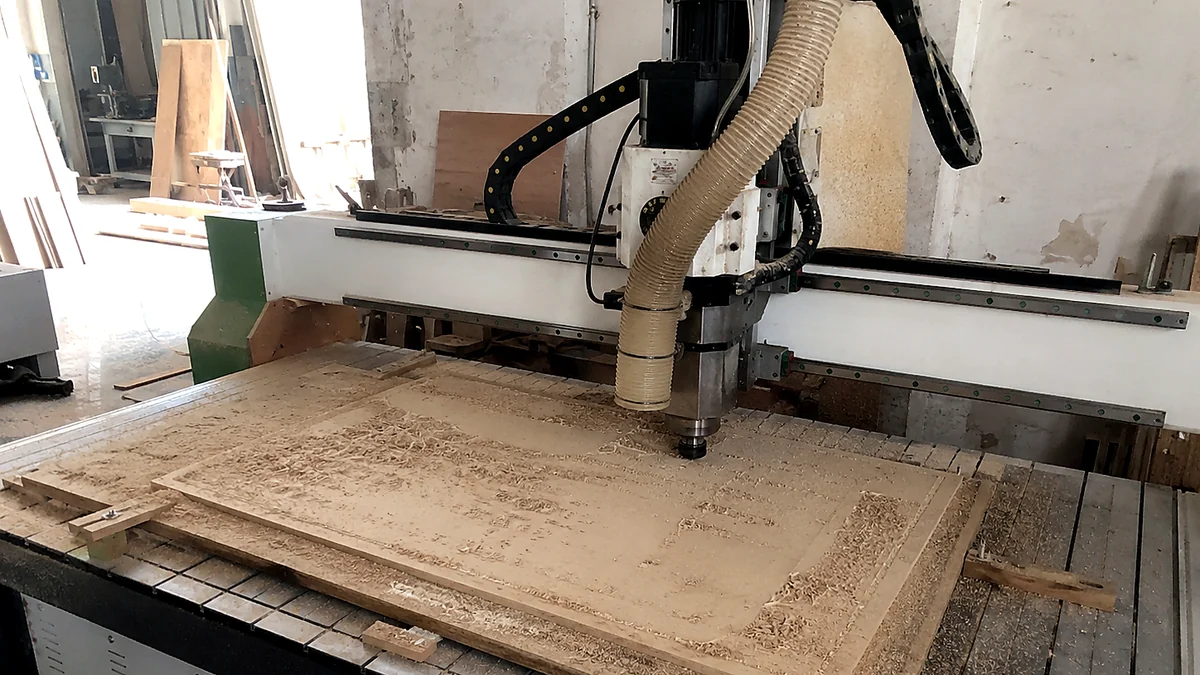
Woodworking machinery cuts a soft material, but the machine itself cannot be soft in its thinking. When a router, edge bander, panel saw, planer, drilling center, or CNC wood carving machine runs at production speed, the final quality depends on precision machined components that are often hidden behind guards and covers. Spindles, shafts, bearing seats, guide blocks, mounting plates, rollers, clamps, and transmission parts decide whether the machine cuts cleanly or creates vibration, burn marks, rough edges, poor repeatability, and unnecessary downtime.
This article looks at the machined metal components inside woodworking machinery from a practical manufacturing view. The goal is not to list every screw and bracket. The goal is to identify which components deserve precision machining, why they affect wood processing quality, and what buyers should check when sourcing replacement parts or custom parts for woodworking equipment.
Quick Answer
Precision machined components used in woodworking machinery include spindle housings, tool holders, cutter arbors, bearing seats, guide rails, linear blocks, roller shafts, feed rollers, pressure wheels, mounting plates, vacuum fixture plates, dust collection connectors, gearbox shafts, pulleys, bushings, wear plates, and custom brackets. These parts matter because woodworking machines need high-speed rotation, stable feed, accurate tool position, smooth sliding motion, and repeatable clamping. A small machining error can show up as chatter, dimensional drift, poor edge finish, tool marks, or assembly problems.
Why Precision Matters in Woodworking Machinery
Wood is easier to cut than steel, aluminum, or titanium, so it is tempting to assume woodworking machinery has loose mechanical requirements. In reality, many woodworking processes are sensitive to motion quality. A high-speed spindle can amplify small runout. A feed roller with poor concentricity can leave inconsistent pressure marks. A guide block with weak flatness can shift a workpiece by fractions of a millimeter. A boring head with poor hole position can make cabinet assembly difficult later.
For woodworking machinery, precision is less about making metal look beautiful and more about controlling motion. The cutter must rotate on the right axis. The panel must feed at a stable speed. The clamping surface must hold without tilting the workpiece. The dust collection path must not interfere with moving parts. When these details are controlled, the machine produces cleaner surfaces, better repeatability, and longer tool life.
Common Precision Machined Components
| Component | Typical Process | Function in Woodworking Machinery |
|---|---|---|
| Spindle housings | CNC milling, boring, facing | Hold bearings and control spindle alignment. |
| Tool holders and cutter arbors | CNC turning, grinding, balancing preparation | Locate cutting tools with low runout. |
| Roller shafts | Turning, threading, keyway machining | Transmit feed motion and support rollers. |
| Bearing seats | Boring, reaming, finish machining | Control fit, noise, heat, and service life. |
| Guide blocks and slide plates | Milling, surface finishing | Keep moving assemblies straight and repeatable. |
| Vacuum fixture plates | Milling, drilling, slotting, sealing groove machining | Hold panels or shaped parts during routing. |
| Custom brackets | Milling, drilling, tapping | Mount sensors, guards, motors, nozzles, and actuators. |
| Bushings and sleeves | Turning, boring, chamfering | Reduce wear and guide rotating or sliding parts. |
1. Spindle Housings and Bearing Seats
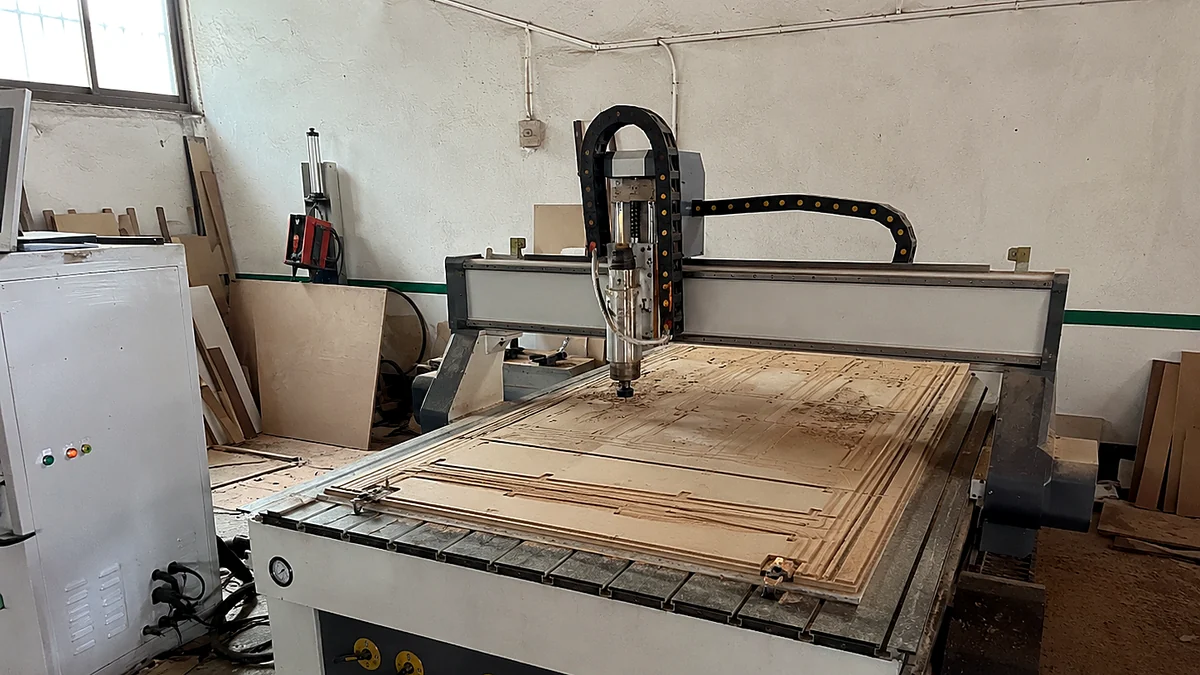
The spindle is the heart of many woodworking machines. Routers, CNC carving machines, drilling units, tenoning machines, and edge trimming stations all depend on high-speed rotation. The spindle housing may look like a simple block or cylinder, but its bearing bores, faces, shoulders, and mounting holes must work together.
If the bearing seat is loose, the spindle can vibrate. If the bore is out of round, the bearing can heat up. If the mounting face is not square, the tool axis may lean. These errors may not destroy the machine immediately, but they show up in the cut: chatter, fuzzy edges, poor surface finish, uneven groove width, or short tool life.
For spindle-related parts, the most important checks are bore size, roundness, coaxiality, face perpendicularity, and surface finish. A good machining plan also protects bearing seats from burrs and coating buildup. The part should be inspected from the same datums used in the final assembly, not only from convenient outside edges.
2. Tool Holders, Cutter Arbors, and Adapters
Cutting tools in woodworking machinery often run fast. Even small runout can become a visible quality problem. A cutter arbor or adapter must locate the tool accurately, clamp it securely, and maintain balance well enough for the intended speed. This is especially important for profile cutters, saw blades, boring tools, and router bits.
CNC turning is commonly used for these round components, but turning alone is not enough. Critical features include the tool mounting diameter, shoulder face, thread, keyway, taper, and any balancing or drive features. If these features are not concentric, the tool may cut more on one side than the other.
For buyers, the useful question is not only “what is the diameter tolerance?” A better question is: which features must run true together? The answer determines whether the part should be machined in one setup, finish-ground, dynamically balanced, or inspected with runout control.
3. Feed Rollers, Pressure Wheels, and Shafts
Woodworking machines must move material smoothly. Feed rollers and pressure wheels control panel travel through planers, moulders, sanders, edge banders, and cutting stations. If these parts are not round, straight, or aligned, the feed becomes inconsistent.
The shaft behind the roller is often the critical machined component. It needs proper bearing fits, straightness, shoulders, keyways, grooves, and threaded ends. A poor shaft can create roller wobble even if the roller surface itself looks fine. In some machines, the pressure wheel or roller also needs a machined hub, sleeve, or insert to keep the rotating assembly stable.
Feed-related parts need a practical balance. They do not always need ultra-tight aerospace tolerance, but they do need repeatable geometry. Concentricity, journal finish, and correct shoulder location often matter more than cosmetic surface finish.
4. Guide Rails, Linear Blocks, and Slide Plates
Many woodworking machines include sliding or positioning mechanisms. A CNC router moves along gantry axes. A boring machine positions heads. An edge bander guides panels along reference surfaces. A panel saw uses carriages and stops. These systems depend on guide components that stay straight, flat, and stable.
Machined guide blocks and slide plates may be made from aluminum, steel, stainless steel, bronze, or engineering plastics depending on the load and wear conditions. The functional surfaces need controlled flatness and parallelism. Mounting holes need stable position. Edges should be deburred carefully so they do not scratch panels or collect dust.
Dust is a special issue in woodworking machinery. Fine wood dust can combine with oil or resin and create abrasive buildup. Parts that slide or guide material should avoid unnecessary grooves, sharp pockets, or burr traps where dust can collect and interfere with motion.
5. Vacuum Fixture Plates and Workholding Parts
Vacuum workholding is common in CNC woodworking, especially for panels, signs, nested parts, and shaped furniture components. The fixture plate may need vacuum channels, sealing grooves, hole arrays, threaded inserts, dowel holes, and reference edges. These features are often CNC machined because sealing and positioning both matter.
A vacuum plate can fail in several quiet ways. If the sealing groove is too shallow or too rough, vacuum leaks. If the plate is not flat, the workpiece can lift. If the reference holes are inaccurate, repeat setups become slow. If the surface has burrs, the part may not sit fully against the plate.
For fixture plates, buyers should define flatness, groove dimensions, hole position, surface finish, and gasket requirements. The best fixture is not only strong. It is predictable, easy to clean, and repeatable after many setup cycles.
6. Gearbox Shafts, Pulleys, and Transmission Interfaces
Woodworking machinery uses belts, pulleys, chains, gears, couplings, and gearboxes to transfer motion. These transmission parts can tolerate some environmental dirt, but they cannot tolerate poor alignment forever. A pulley bore that is not concentric, a shaft keyway that is poorly positioned, or a coupling face that is not square can create vibration and wear.
Precision machining helps keep the transmission path stable. Typical work includes shaft turning, keyway machining, pulley boring, set screw holes, snap ring grooves, and coupling faces. The key is to control the relationship between the bearing journals, drive features, and mounting faces.
When a transmission part fails, the visible symptom may be belt noise or bearing wear, but the root cause may be a small machining or alignment error. That is why inspection should include runout, bore fit, and face relationship where needed.
7. Sensor Brackets, Nozzle Mounts, and Adjustment Hardware
Modern woodworking machinery uses sensors, pneumatic cylinders, dust nozzles, glue units, guards, cameras, and small adjustment mechanisms. These parts are often mounted with custom brackets. A bracket may seem minor, but a poor bracket can place a sensor too far away, aim a nozzle incorrectly, or make adjustment difficult.
Custom brackets need the right mix of stiffness, access, and adjustability. Slots, dowel holes, threaded holes, counterbores, and chamfers should be designed around how a technician will actually install and adjust the part. CNC machining makes these features repeatable and cleaner than hand modification.
Material Choices for Woodworking Machinery Parts
| Material | Where It Is Used | Why It Is Chosen |
|---|---|---|
| 6061 aluminum | Brackets, plates, guards, fixture parts | Lightweight, easy to machine, good for anodizing. |
| Carbon steel | Shafts, structural parts, wear-resistant mounts | Strong, economical, suitable for many transmission parts. |
| Stainless steel | Dusty, humid, or glue-contact areas | Corrosion resistance and better cleaning behavior. |
| Bronze | Bushings, sliding supports, wear sleeves | Good wear behavior against shafts and sliding parts. |
| POM / Delrin | Guides, low-friction pads, soft-contact blocks | Low friction, stable machining, gentle contact with workpieces. |
| Nylon | Rollers, guides, protective blocks | Tough and wear-resistant, but moisture absorption must be considered. |
Tolerance and Surface Finish Priorities
Woodworking machinery parts should not be over-toleranced everywhere. The expensive mistake is applying tight tolerance to cosmetic dimensions while leaving functional relationships vague. A better drawing separates critical features from general features.
Bearing seats, shaft journals, spindle interfaces, dowel holes, locating faces, and sliding surfaces deserve tighter control. Guard brackets, cover plates, and non-locating outside profiles can usually use looser tolerance. Surface finish should be controlled where it affects motion, sealing, wear, or cleaning. A beautiful finish on a hidden outside wall matters less than a clean bore, flat mounting face, or burr-free guide edge.
Design Mistakes That Increase Cost
Many machined parts for woodworking machinery become expensive because of avoidable design choices. Deep narrow pockets require long tools. Sharp inside corners force slow machining or special cutters. Thin plates distort when clamped. Too many tight tolerances increase inspection time. Unclear datums cause arguments after assembly.
The easiest cost reduction is often design clarity. Define the functional faces. Add reasonable corner radii. Avoid unnecessary deep pockets. Use slots where adjustment is needed. Keep wall thickness stable. Mark the surfaces that must stay free of burrs. These small drawing choices can reduce machining time and improve machine reliability.
Inspection Checklist for Buyers
- Check bearing bore size, roundness, and perpendicularity.
- Check shaft runout across bearing journals and drive features.
- Check hole position from functional datums, not only from outside edges.
- Check flatness on mounting faces, fixture plates, and sliding surfaces.
- Check burr control near guides, grooves, threads, and sealing areas.
- Check coating or anodizing thickness where it affects fit.
- Check whether replacement parts can be made from the same datum scheme later.
When Custom CNC Parts Make Sense
Custom CNC parts make sense when the original part is worn, unavailable, poorly designed, or not suitable for a modified machine. They also make sense when a factory wants to add sensors, improve dust collection, change a fixture, upgrade a feed system, or adapt one machine for a new product style. For buyers comparing machine builders or woodworking equipment references, woodworking machinery suppliers can also provide useful context on how routers, cutting machines, and production lines are configured around real factory workflows.
Before ordering a custom replacement, measure the mating parts carefully. A worn shaft or bracket may not represent the original design. If possible, provide the old part, photos, key dimensions, material requirements, and the function of the part inside the machine. The more the supplier understands the assembly, the easier it is to choose the right tolerance and material.
Related DAXIN Services
This topic connects naturally with CNC machining services, CNC machining tolerances, CNC machined shafts, and CNC machined brackets. These guides are useful when woodworking machinery parts need controlled fits, clean movement, and repeatable assembly.
Conclusion
Precision machined components are the quiet foundation of woodworking machinery. They do not always appear in product brochures, but they determine spindle stability, feed accuracy, workholding reliability, guide smoothness, and maintenance life. The best parts are not simply machined to tight numbers. They are machined around the real function of the machine.
For woodworking equipment, the most valuable precision is practical precision: the right tolerance on the right feature, the right material for the environment, the right surface finish for motion or fit, and the right inspection method for the assembly. When those decisions are made well, the machine cuts cleaner, runs quieter, and stays productive for longer.