
Anodize vs Alodine is not a simple question of which finish is better. They solve different problems on aluminum parts. Anodizing builds a harder oxide layer for wear resistance, corrosion protection, color, and appearance. Alodine, also called chemical conversion coating or chem film, creates a thin conductive conversion layer that improves corrosion resistance and paint adhesion with much less dimensional change.
For CNC machined aluminum parts, choosing the wrong one can cause real assembly trouble. An anodized bore may become tight. A black anodized cosmetic surface may reveal tool marks. An Alodine part may keep electrical conductivity but fail wear expectations. A buyer may ask for “gold anodize” when the correct process is actually clear or yellow chromate conversion coating. This guide explains how to choose between anodize and Alodine based on function, tolerance, conductivity, appearance, cost, and inspection.
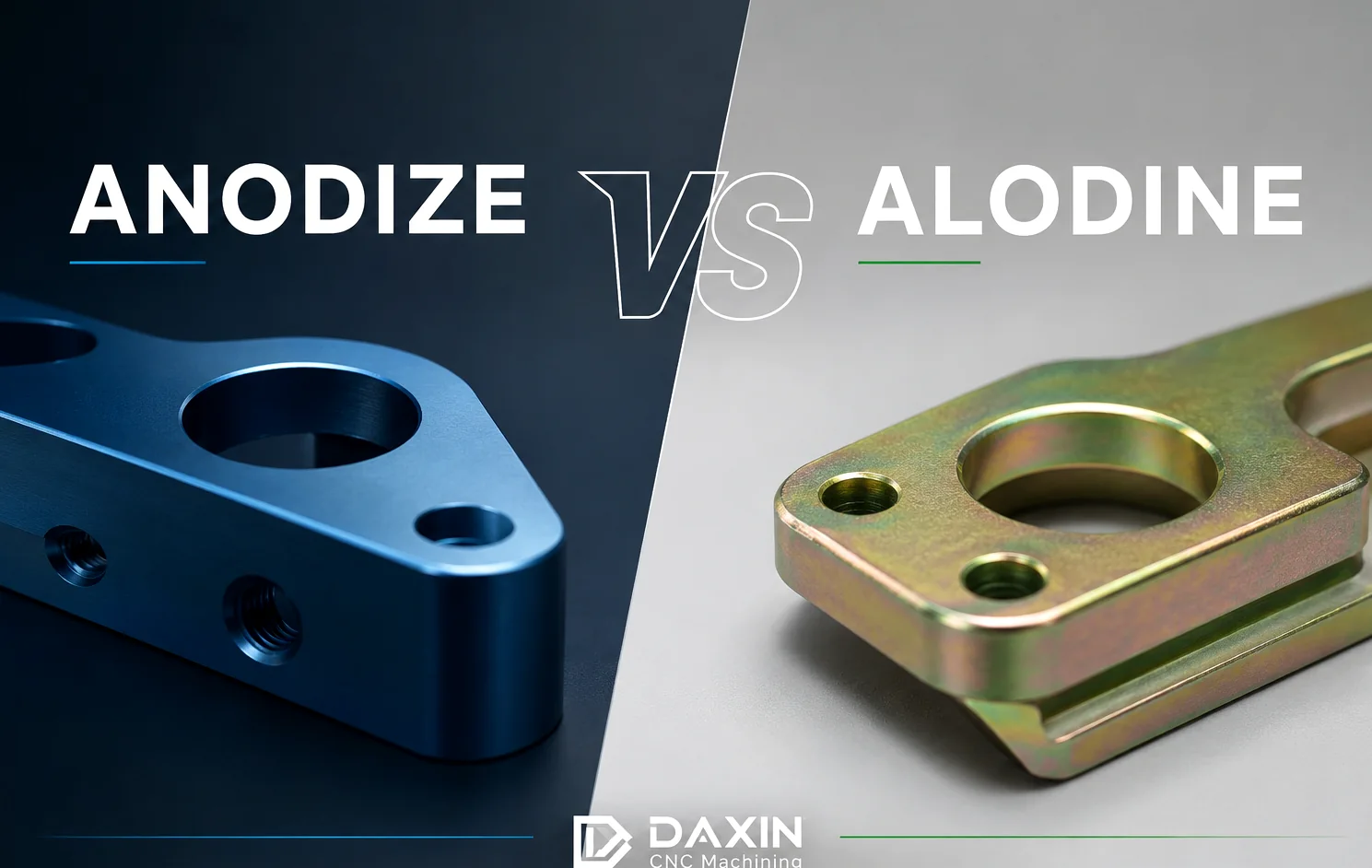
Quick Answer
Choose anodize when the part needs a harder surface, better wear resistance, color options, cosmetic appearance, or stronger long-term surface durability. Choose Alodine when the part needs corrosion protection with electrical conductivity, minimal dimensional change, paint or powder coating adhesion, or protection inside threaded holes and complex features. Anodize is usually thicker and more wear resistant. Alodine is thinner, more conductive, and less likely to disturb tight tolerances.
Anodize vs Alodine Comparison Table
| Factor | Anodize | Alodine / Chem Film |
|---|---|---|
| Main purpose | Harder protective oxide layer | Thin corrosion-resistant conversion layer |
| Wear resistance | Better, especially hard anodize | Limited |
| Electrical conductivity | Poor after coating unless masked | Usually conductive enough for grounding |
| Dimensional impact | Noticeable on tight fits | Very small |
| Color | Clear, black, colored, hardcoat shades | Clear, yellow/gold, iridescent depending on process |
| Paint adhesion | Can be used, but not always ideal | Common pretreatment for paint or powder coating |
| Typical use | Housings, brackets, covers, wear surfaces | Electrical panels, aerospace-style parts, paint base |
What Is Anodizing?
Anodizing is an electrochemical process that grows an aluminum oxide layer from the surface of the part. The part becomes the anode in an acid electrolyte, and the controlled oxide layer becomes part of the aluminum surface. This is why anodizing is more integrated than paint or plating. It is not just a film sitting on top.
For CNC machined aluminum parts, anodizing is widely used because it improves corrosion resistance, gives a cleaner appearance, and can provide clear, black, blue, red, gold, or other colors depending on alloy and process. Hard anodizing creates a thicker, harder coating for more demanding wear and abrasion conditions.
What Is Alodine?
Alodine is a trade name often used generically for chromate conversion coating or chemical film on aluminum. Instead of building a thick oxide layer, it chemically converts the surface into a very thin protective layer. It is commonly used when corrosion protection is needed but electrical conductivity must remain, or when the part will later be painted.
In drawings, buyers may see terms such as Alodine, chem film, chemical conversion coating, chromate conversion, clear conversion coating, yellow chromate, or MIL-DTL-5541 style requirements. The exact chemistry and compliance requirements should be confirmed for the project, especially when the part is used in aerospace, defense, electronics, or export-controlled assemblies.
The Real Difference: Surface Function
The most important difference is surface function. Anodize changes the part surface into a harder, more wear-resistant oxide. Alodine keeps the surface much closer to bare aluminum in thickness and conductivity while improving corrosion resistance. That is why anodize is often selected for parts people touch, slide, clean, or see. Alodine is often selected for parts that need grounding, bonding, paint adhesion, or minimal dimensional change.
A practical way to think about it is this: anodize is a finish that often becomes part of the product’s final appearance and wear behavior. Alodine is often a functional treatment that protects the aluminum while staying thin and electrically useful.
Dimensional Change and Tolerance Risk
Anodizing changes dimensions because the oxide layer grows into and out of the aluminum surface. The exact effect depends on type, thickness, alloy, and process. For loose clearance features, this may not matter. For precision bores, sliding fits, threaded holes, dowel holes, sealing lands, and bearing seats, it can matter a lot.
Alodine has much less dimensional impact. That makes it attractive for parts where holes, faces, or threads cannot tolerate coating buildup. It is not automatically better, but it is easier to use around tight geometry. If your drawing has tight fits, review the finish requirement together with DAXIN’s CNC machining tolerances guide.
Conductivity and Grounding
If electrical grounding, EMI shielding, or bonding matters, Alodine is often the safer choice. Anodize is an oxide layer, and oxide is generally not a good electrical conductor. If an anodized part needs grounding, the drawing may need masking, post-machined contact pads, conductive hardware paths, or controlled bare areas.
This is one of the most common hidden mistakes in aluminum enclosure and electronics projects. A part may look beautiful after black anodizing, but the electrical contact areas no longer behave as expected. Alodine avoids much of that problem because the conversion layer is thin and more conductive.
Corrosion Resistance
Both anodize and Alodine improve corrosion resistance compared with untreated aluminum, but they do it differently. Anodize generally provides stronger surface durability and can be sealed for better corrosion performance. Hard anodize can be particularly useful in abrasive or exposed environments.
Alodine provides useful corrosion protection while preserving conductivity and keeping the part thin. It is often chosen for parts that will be painted, assembled into electrical systems, or used where scratches are less likely to be heavy wear points. If the part will be frequently rubbed, cleaned, or abraded, anodize may be more appropriate.
Appearance and Color
Anodize is usually better when appearance matters. Clear anodize can keep an aluminum look. Black anodize gives a technical, clean finish. Color anodizing supports product identity and visual sorting. However, anodize can reveal tool marks, alloy variation, grain direction, weld areas, and surface prep differences.
Alodine appearance is more limited. Clear chem film may look close to raw aluminum, while yellow or gold chromate can appear iridescent. It is not usually chosen for premium cosmetic appearance. It is chosen because the part needs function more than beauty. For color and finish planning, see DAXIN’s guide to aluminum anodizing colors.
Masking Holes, Threads, and Contact Areas
Masking is where many finishing problems become expensive. Anodize may need masking on threaded holes, precision bores, sealing surfaces, electrical contact pads, bearing seats, or areas that must remain dimensionally unchanged. If the drawing does not identify these zones, the finisher may coat everything.
Alodine usually requires less masking because it is thin, but it still may need controlled areas depending on the assembly. For example, a sealing face may need a specific appearance or cleaning standard. A threaded feature may need a no-residue requirement. Finishing notes should be tied to function, not copied from an old drawing.
Cost and Lead Time
Cost depends on part size, quantity, color, masking, certification, surface preparation, and local finishing availability. Standard clear or black anodize is common, but masking and cosmetic requirements can increase cost. Hard anodize usually costs more than standard anodize because the coating is thicker and process control is more demanding.
Alodine is often economical for simple parts, but compliance, documentation, and environmental rules can affect cost. If the requirement calls for a specific class, type, or specification, tell the supplier early. A vague note such as “Alodine finish” may not be enough for regulated work.
When to Choose Anodize
| Choose Anodize When… | Reason |
|---|---|
| The part is visible to the customer | Anodize gives cleaner cosmetic options |
| The surface may wear or slide | Anodize is harder than chem film |
| You need black or colored aluminum | Anodize supports dyeing |
| The part needs better abrasion resistance | Hard anodize can improve durability |
| Electrical conductivity is not needed | Oxide insulation is not a problem |
When to Choose Alodine
| Choose Alodine When… | Reason |
|---|---|
| The part needs electrical conductivity | Chem film supports grounding and bonding better |
| Dimensional change must be minimal | The coating is very thin |
| The part will be painted later | Alodine is a common paint pretreatment |
| Threads and holes must stay close to machined size | Less buildup than anodize |
| Appearance is secondary to function | Performance matters more than color |
Common Buyer Mistakes
The first mistake is confusing Alodine with gold anodizing. A yellow chromate conversion coating can look gold, but it is not the same as anodized gold. The second mistake is asking for anodize on a part that needs electrical contact. The third mistake is forgetting coating thickness on precision holes. The fourth mistake is treating all aluminum alloys as if they anodize the same way.
The fifth mistake is specifying finish too late. Finish affects machining dimensions, inspection, masking, deburring, and packaging. It should be part of the manufacturing plan from the beginning, especially for CNC machined housings, brackets, heat sinks, plates, and electronic hardware.
How Finish Affects CNC Machining
The finish decision should influence the machining plan. If the part will be anodized, sharp edges may need controlled breaks because anodize can make edges look harsh or uneven. Cosmetic faces may need consistent tool paths or bead blasting before anodizing. Precision holes may need to be machined oversize or masked depending on the final fit.
If the part will receive Alodine, the machining plan may focus more on clean surfaces, contamination control, and maintaining conductivity. Burrs, oils, fingerprints, and inconsistent surface prep can still affect final quality. DAXIN’s guide to surface treatment after CNC machining covers these planning issues in more depth.
Best Drawing Notes
A good drawing note should define the finish clearly, identify masked areas, and state the functional requirement. For anodize, the note may specify clear, black, color, hard anodize, thickness range, sealing, cosmetic faces, and masked features. For Alodine, the note may specify chemical conversion coating type, class, color, conductivity requirement, or paint preparation requirement.
Do not rely on a single word if the part is important. “Anodize” and “Alodine” are starting points, not complete engineering instructions. The more critical the assembly, the more the drawing should explain why the finish is being used.
FAQ
Is Alodine the same as anodizing?
No. Anodizing builds an oxide layer electrochemically. Alodine is a chemical conversion coating. They differ in thickness, hardness, appearance, conductivity, and use case.
Which is better for electrical conductivity?
Alodine is usually better because it keeps the aluminum surface more conductive. Anodize is generally insulating unless contact areas are masked or machined afterward.
Which is better for wear resistance?
Anodize is better for wear resistance, especially hard anodize. Alodine is too thin for serious abrasion protection.
Can you paint over anodize or Alodine?
Both can be used in finishing systems, but Alodine is commonly selected as a paint or powder coating pretreatment because it supports corrosion resistance and adhesion with minimal thickness.
Related DAXIN Services
DAXIN supports CNC machining services for aluminum housings, brackets, plates, covers, fixtures, heat sinks, electronics parts, and precision components requiring anodize, hard anodize, black anodize, clear anodize, Alodine, bead blasting, brushing, polishing, plating, or other surface treatment planning. Related guides include aluminum surface finish, clear anodizing, CNC aluminum housings, and black anodizing defects.
CTA
Not sure whether your aluminum CNC part should use anodize or Alodine? Upload Your CAD File / Get a Quote. DAXIN can review tolerance risk, masking zones, conductivity needs, cosmetic surfaces, and finish notes before production.